Plastic Project
The Plastic Project is the first initiative of its kind on Mabul Island, providing a local solution to a long-standing waste challenge. Supported by WWF and the EU and run in partnership with the Mabul Eco Youth, the project transforms discarded plastic into usable products through small-scale recycling technology. By giving plastic a monetary value and creating new income opportunities for young people in the community, the project reduces waste, supports local livelihoods, and introduces the island’s first steps toward a circular economy.
Why It Matters
Mabul has limited waste-management options, and plastic often ends up burned or entering the sea. The Plastic Project offers the island’s first practical recycling solution, reducing pollution and turning waste into a useful resource.
How It Works
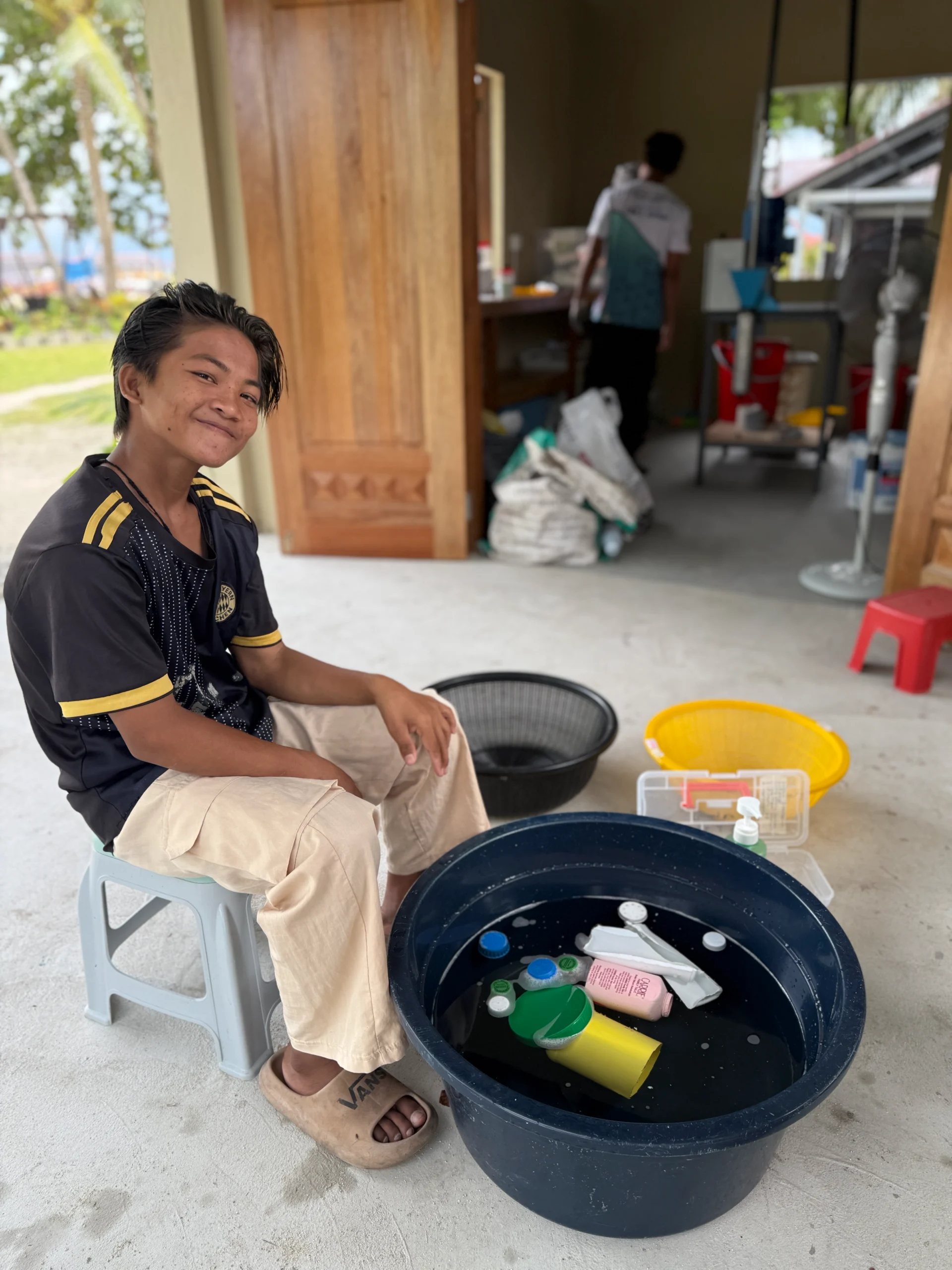
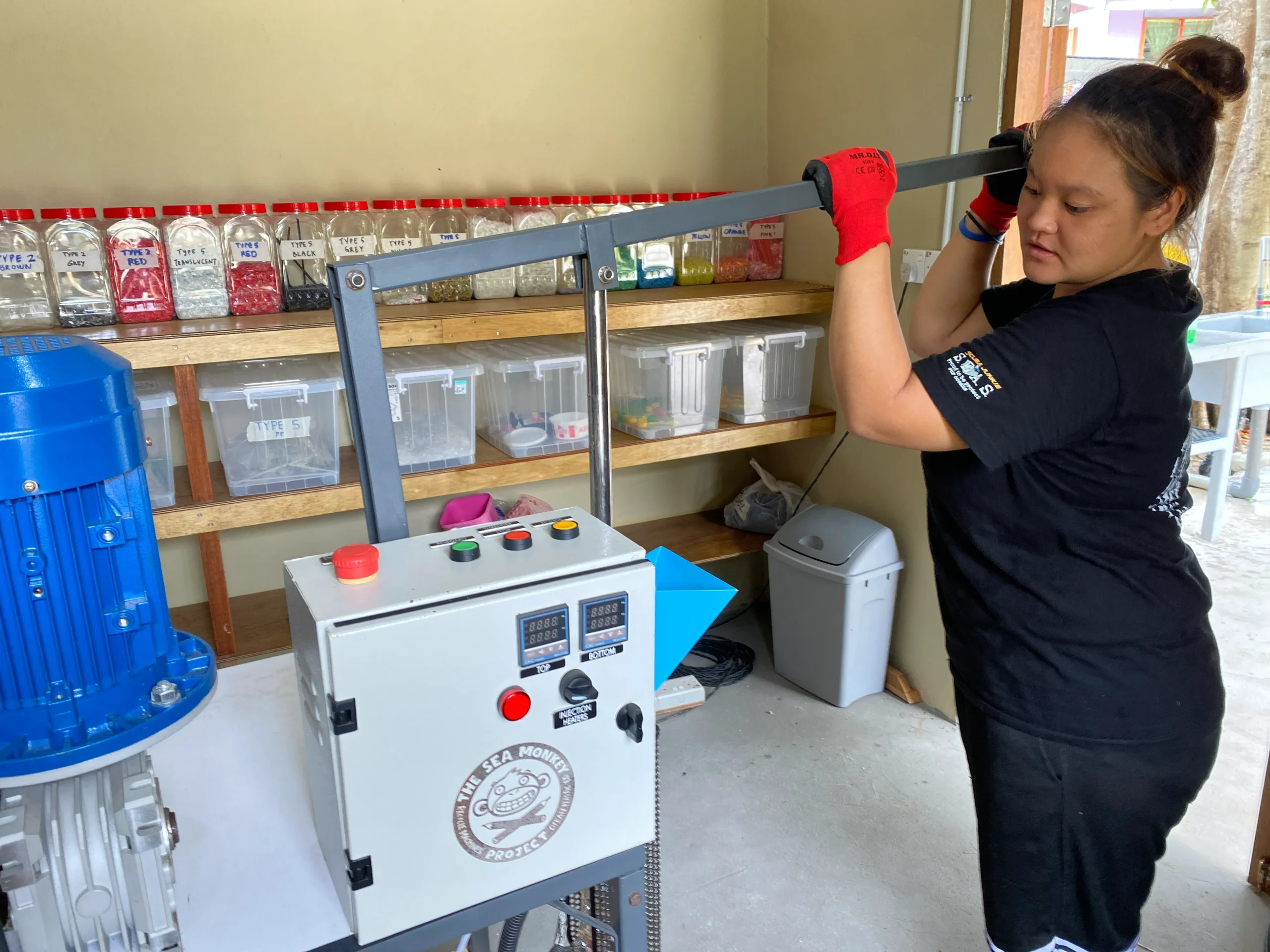
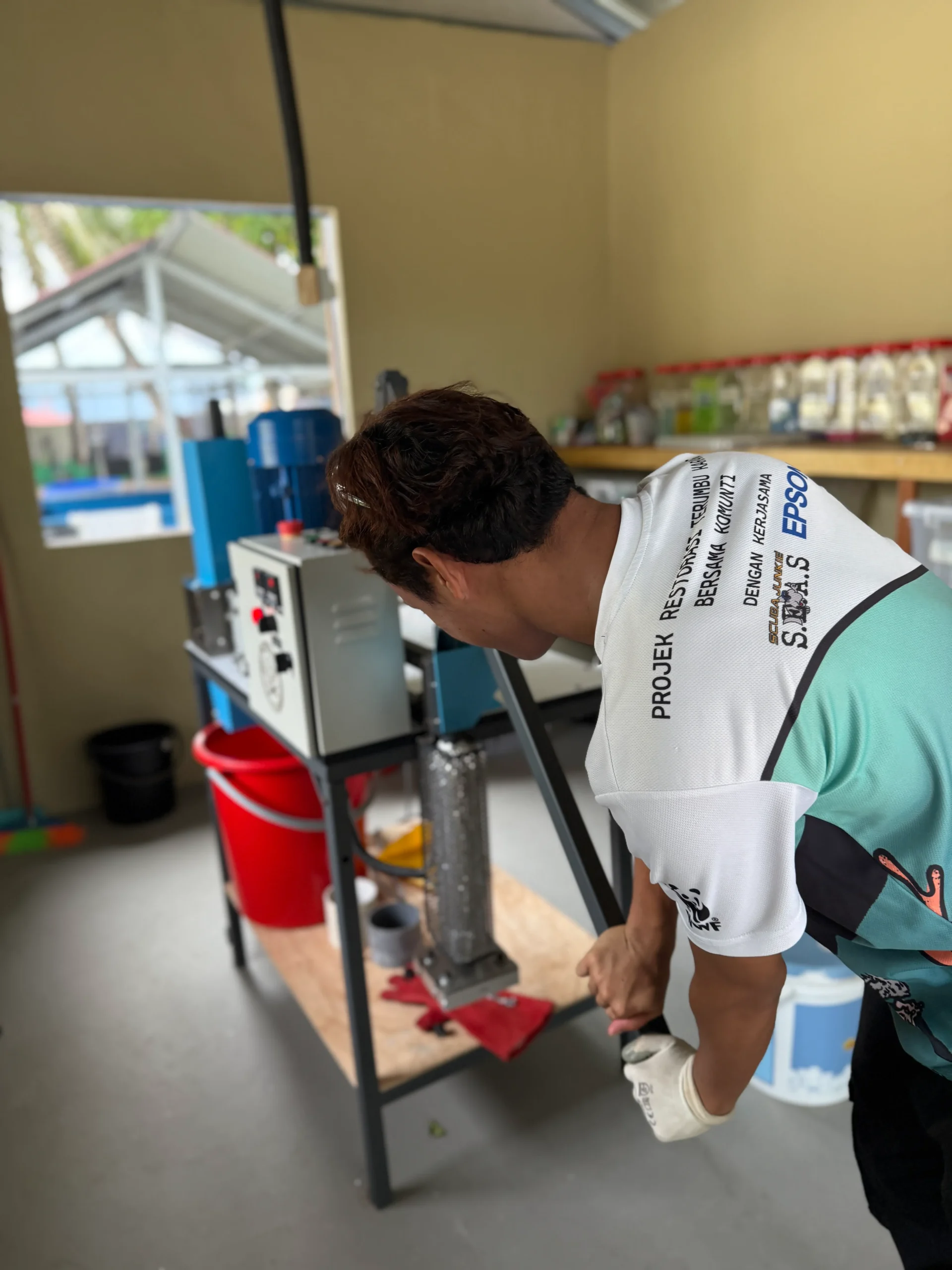
Using small-scale recycling machines, clean plastic is collected, shredded, melted, and moulded into new products. The process is simple, effective, and run by the Mabul Eco Youth, creating a circular system where plastic is reused instead of discarded.
Community Impact
By buying clean plastic from local residents, the project gives plastic a monetary value and encourages collection. The Mabul Eco Youth earn allowances for running the machines and commission from product sales, building income opportunities and practical skills.
Eco Youth Participation
The Eco Youth operate the machines, create products, and manage basic sales and record keeping. Several have also advanced through dive training to support other SEAS conservation projects. The programme provides hands-on experience and long-term skill development.
Supported by WWF & the EU
The project is made possible through support from WWF and the European Union. The EU funded the recycling machine, constructed the project building, and provides allowances for the Mabul Eco Youth while the programme becomes fully self-sustaining. Their support ensures the project has a strong foundation and long-term viability
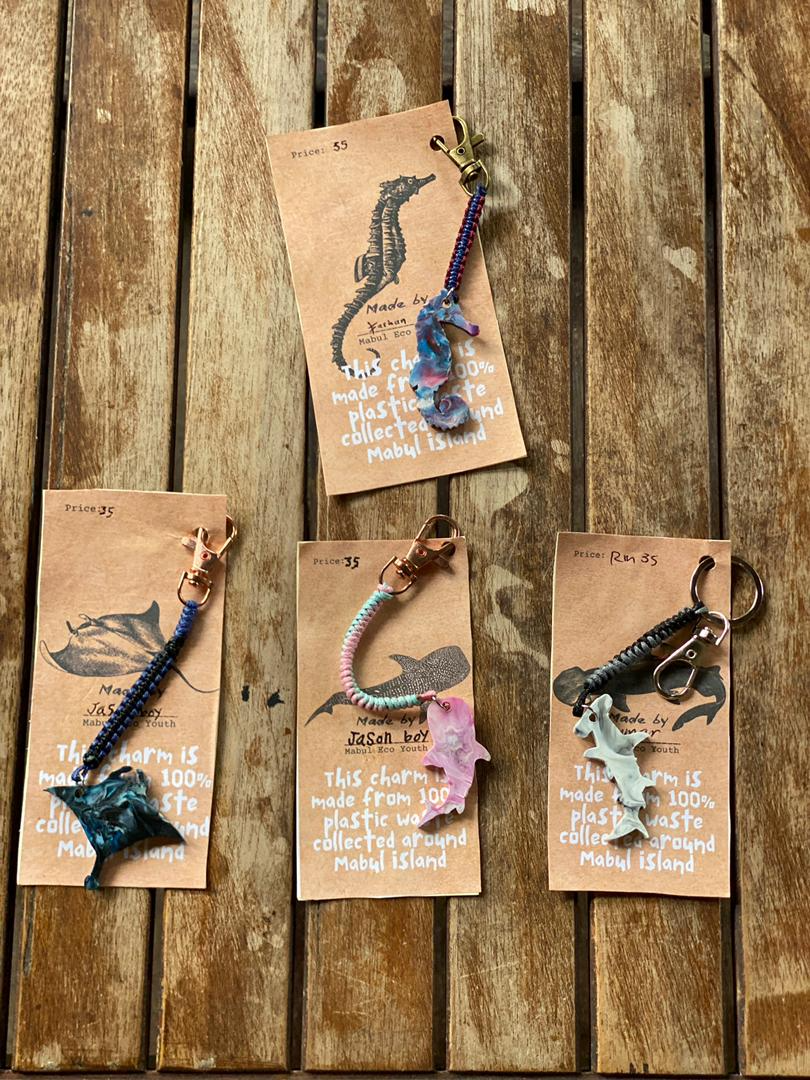
Products
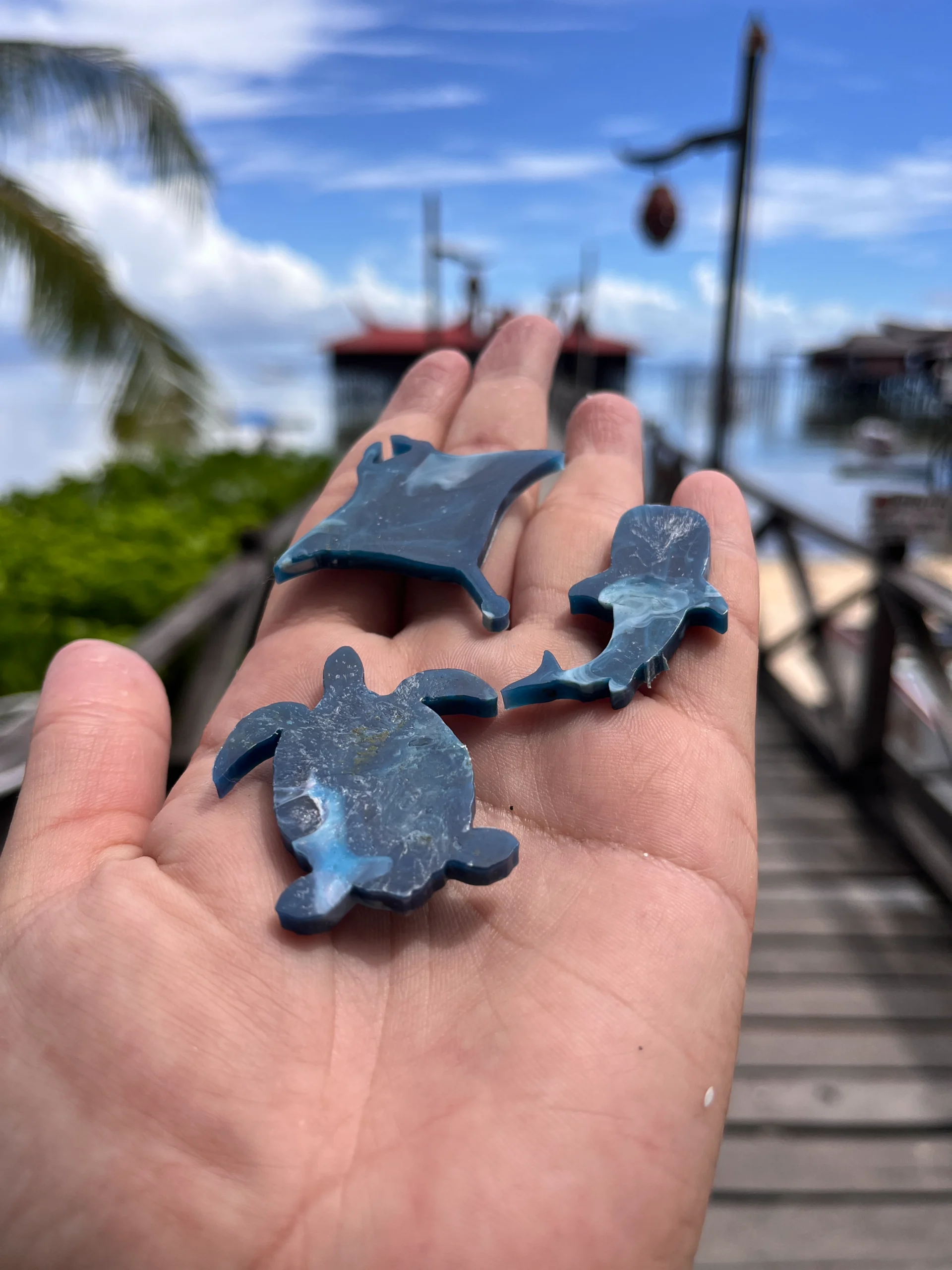
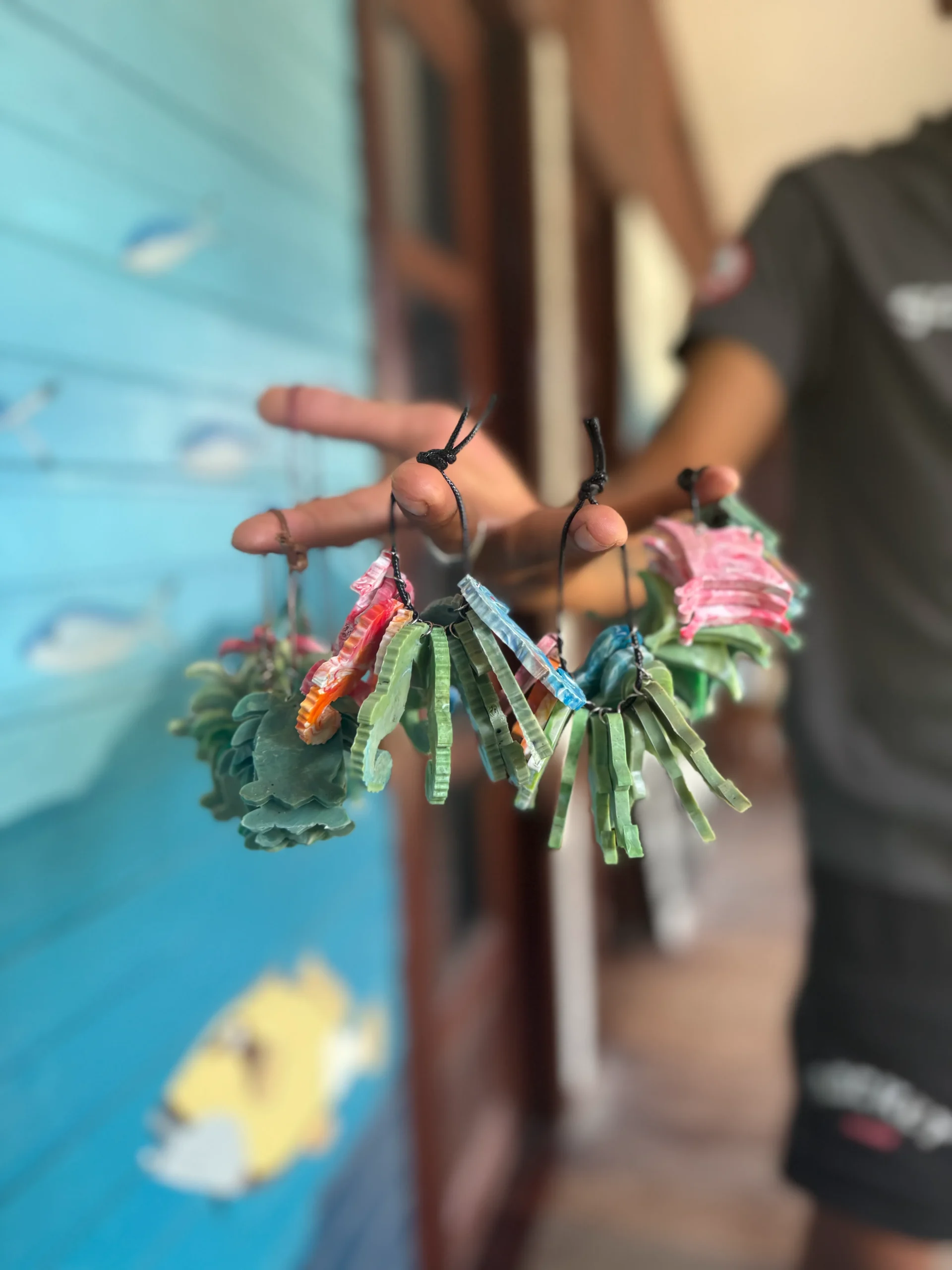
Recycled plastic is moulded into coasters, 2D marine shapes, beads, and small accessories such as keychains and necklaces. Each piece is unique, handmade by the Eco Youth, and sold to support the project’s continued operation.