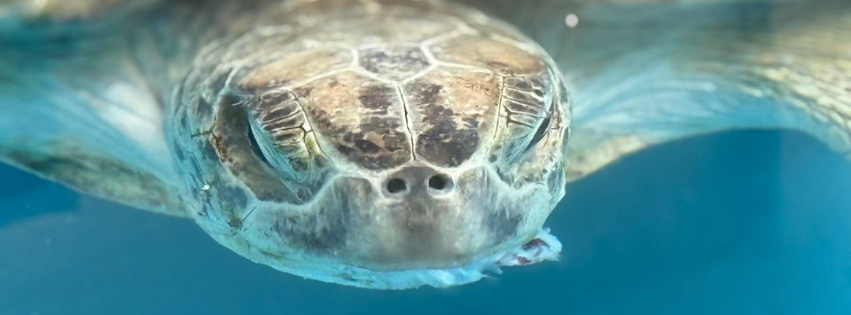
A Turtle in Trouble
Looking back on Harry’s story, it’s hard to believe how far our stroppy little turtle came. There were times when we never thought we would see him released, so watching him make his way back to the ocean was incredibly special and emotional. There may even have been a few happy tears.
Harry was first reported to us by one of the Scuba Junkie dive crew, who had spotted a turtle in front of our jetty that wasn’t moving and didn’t look well. One of our team members headed out with another crew member to assess the situation. When they found him still in the same spot, the decision was made to bring him in.
He was severely malnourished and covered in sand and algae, which is never a good sign. He was so weak that he barely resisted as we brought him to the surface.
An Unexpected Discovery
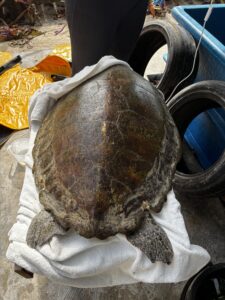
Once safely transported to the rehabilitation centre, we carried out an initial assessment and decided to place him in a freshwater soak. This helps turtles rehydrate by preventing them from taking in additional salt. While he was in the tank, we noticed he was covered in parasites. We decided to keep him in freshwater for longer, as the parasites appeared unable to survive in those conditions.
The first morning after an admission is always difficult. You spend the night wondering if your patient made it through. Thankfully, our young turtle had survived, and what we later identified as marine leeches had all fallen off. The yet-to-be-named turtle was often referred to as “he who has no name” (partly because one member of the team may have been re-reading Harry Potter at the time).
The Rollercoaster of Rehabilitation
Rehabilitating turtles is often an emotional rollercoaster. Did they make it through the night? Are they going to eat? Will they poop? Every one of these milestones feels like a small victory.
At the time, we were caring for Lesley, who was nearing release, Jay, who was presenting his own challenges, and Harry, as he eventually came to be known. Harry took us on quite a journey. He would make progress, eating well and gaining weight, only to take a step backwards by refusing food and losing condition again.
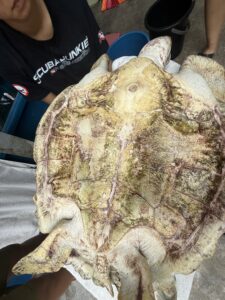
Harry was so malnourished that we had to be extremely careful whenever we handled him. His poor condition led to the development of a hole in his plastron, with cartilage beginning to protrude. Over time, the wound worsened. The hole became larger and more surrounding tissue died, reducing the chances of successful healing.
Turtles are particularly difficult patients to work with. Their body shape makes wound management challenging, and because they spend their lives in water, keeping wounds clean, encouraging healing and preventing water from entering the body cavity can be incredibly difficult. On top of this, Harry remained frustratingly inconsistent with feeding. Some days he would eagerly accept food, while on others he would refuse it completely.
It was at this stage that our amazing veterinarian, Dr Nabila, advised that Harry was likely to become a palliative care case. It was heartbreaking news to hear.
When Hope Started to Return
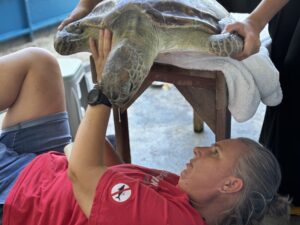
Still, we carried on doing everything we could. We encouraged him to eat with plenty of his favourite foods, carefully cleaned and managed his wound, and hoped for the best.
Then something changed.
Harry started eating consistently. He developed a particular love for squid and quickly learned that seeing us usually meant more squid was on the way. Better still, he started gaining weight, growing stronger and showing signs that his wound was finally healing.
Our boy chonked up beautifully and transformed into a feisty, stroppy teenager who occasionally reminded us exactly how much strength he had regained.
Back to the Ocean
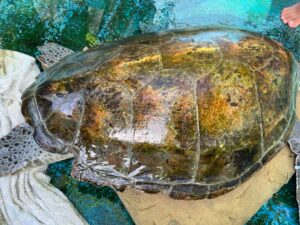
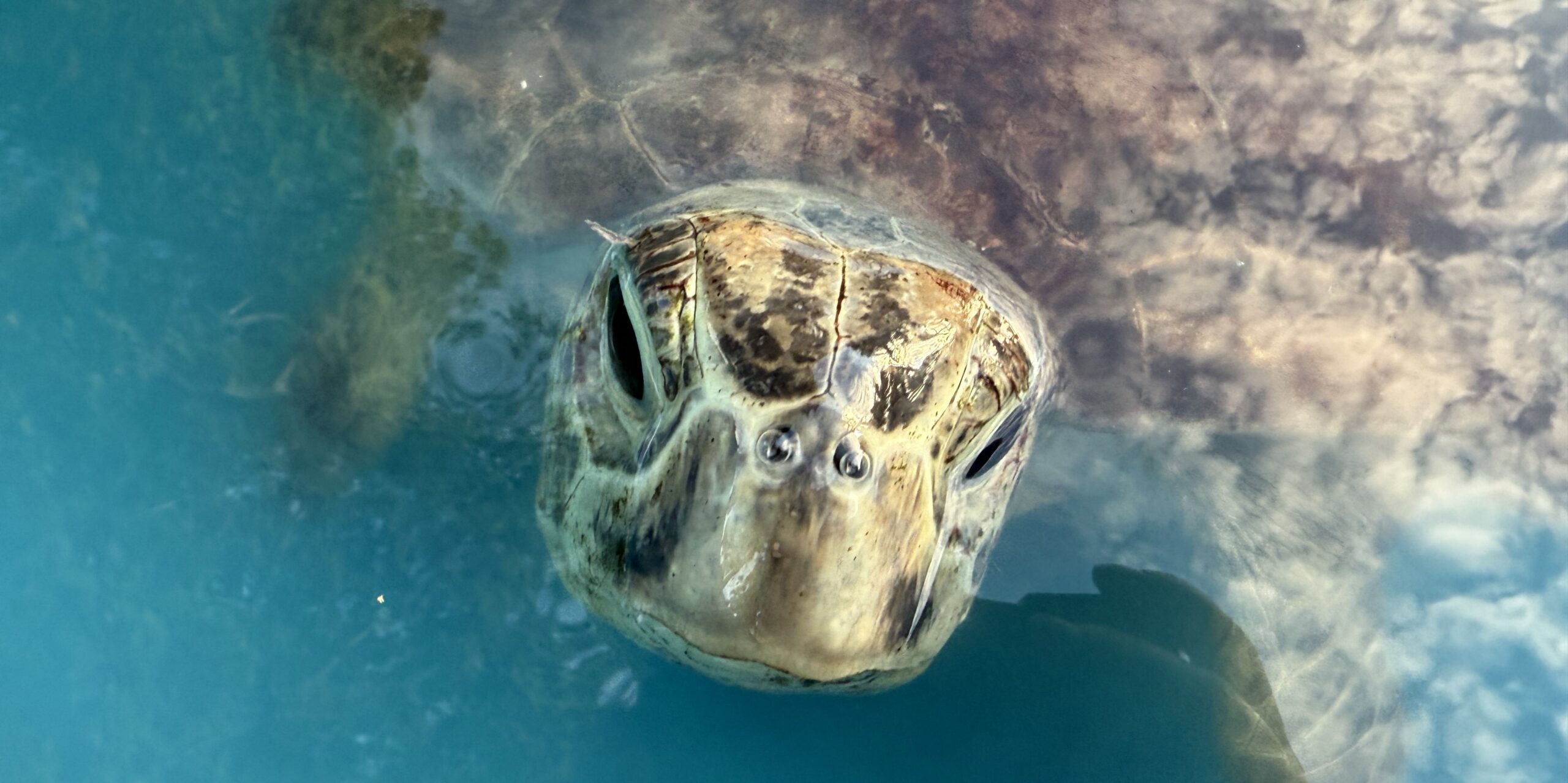
Watching Harry swim back into the ocean marked the end of a long and challenging journey. It was a moment of immense pride for everyone involved.
Not every rehabilitation story ends this way. Wildlife rehabilitation is often difficult, and not every patient can be saved. But moments like Harry’s release remind us why we do this work. Seeing a turtle that once seemed to have no chance return to the ocean makes every setback worthwhile and gives us the motivation to keep fighting for the next one.
Leave a Reply
Your email address will not be published. Required fields are marked *