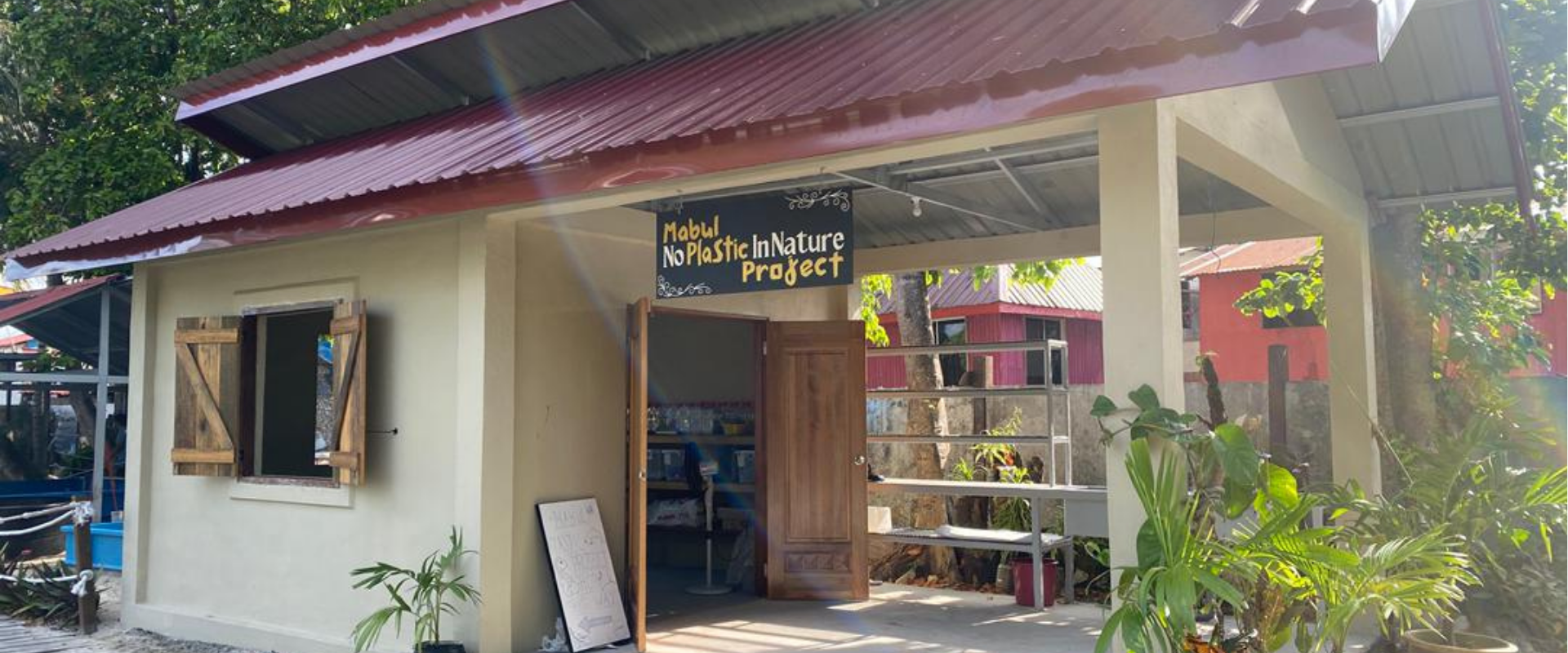
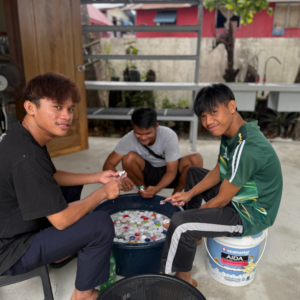
When the Mabul Plastic Project launched in April 2025, it had two clear goals: to give certain types of plastic a second life and to create meaningful employment opportunities for a group of young undocumented adults from Mabul Island.
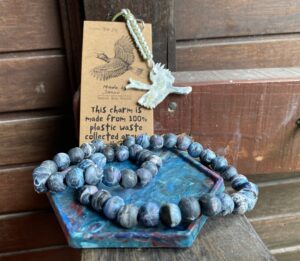
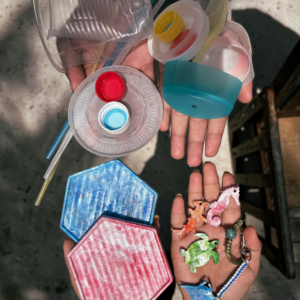
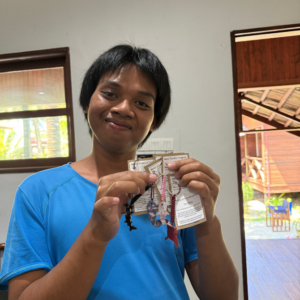
Rather than seeing plastic as waste, we wanted to demonstrate that it could become something valuable. Today, discarded bottle caps and containers are transformed into colourful keyrings, bracelets, coasters and other products, creating both environmental and social impact.
 More Than a Souvenir
As part of the Scuba Junkie family, one of the biggest strengths of the Mabul Plastic Project is the people we can reach. The majority of our products are purchased by Scuba Junkie guests—people who have spent time diving or snorkelling around Mabul and have seen first-hand both the beauty of the reefs and the challenges plastic pollution creates.
That means our products become much more than souvenirs. Each bracelet, coaster or keyring represents a place they’ve visited and supports the positive changes we’re working towards on the island.
The Power of a Conversation
Like many conservation projects, ours has grown through simple conversations.
The recycling machines we use today came about during a chat with the WWF Semporna team. They had funding available for recycling equipment but nowhere suitable to house it. We had the ideal location and a clear vision for how the machines could be used, but no funding to buy them ourselves. It was one of those moments where everyone realised they had exactly what the other needed.
A second conversation helped shape the next stage of the project.
One of Scuba Junkie’s guests works in connecting organisations within the recycling industry. After hearing about the work SEAS was doing, they introduced us to a plastic buyer based in Tawau. That single introduction allowed us to begin purchasing PET plastic from the local community, opening the project up to far more people across Mabul Island.
Sometimes the biggest opportunities don’t come from months of planning—they start with a conversation.
Expanding the Buy-Back Scheme
Our current focus is expanding the Plastic Buy-Back Scheme by encouraging more of the villages closest to us to take part.
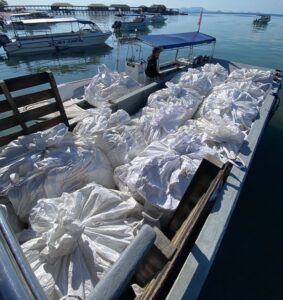
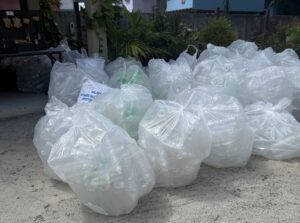 Residents can bring their PET plastic to us, where we purchase it for RM0.50 per kilogram. Once we’ve collected around 300 kilograms, it’s transported to Tawau before continuing its recycling journey.
Financially, the scheme isn’t designed to make money. We currently receive around RM0.20 per kilogram for the PET we sell, meaning we operate the buy-back scheme at a loss. Income from products made through the Mabul Plastic Project helps bridge that gap, as does the sale of plastic bottles generated by Scuba Junkie, which are sold directly back to our cleaning product supplier at a higher price.
For us, the real value isn’t in the plastic itself. It’s in creating a simple, accessible way for people to keep plastic out of the environment.
 Why Is Plastic Worth So Little?
It’s a question we’re asked regularly.
Although plastic has value, transporting it doesn’t come cheaply. After leaving Mabul, it must be transported to Tawau before continuing on to recycling facilities in Kuala Lumpur. Storage, handling and transport all add costs, meaning the value of the material itself is relatively low.
Despite that, every kilogram collected is one less kilogram that risks being burned, dumped or ending up in the ocean.
Looking Ahead
Our long-term goal is to make the Plastic Buy-Back Scheme available to everyone on Mabul Island, giving every resident the opportunity to dispose of recyclable plastic responsibly.
One of the biggest investments we’d like to make is a plastic compactor. Compressing PET bottles into dense bales would make them much easier to handle, store and transport, allowing us to send much larger quantities for recycling in a single shipment.
Alongside this, we’ll continue developing new products through the Mabul Plastic Project and exploring new markets for them. Every product sold supports employment for the Mabul Eco Youth while helping fund our wider waste management initiatives.
The Mabul Plastic Project has never been just about recycling plastic. It’s about creating opportunities, building relationships and showing that when communities, businesses and conservation organisations work together, small conversations really can lead to lasting change.
Leave a Reply
Your email address will not be published. Required fields are marked *