The Rescue
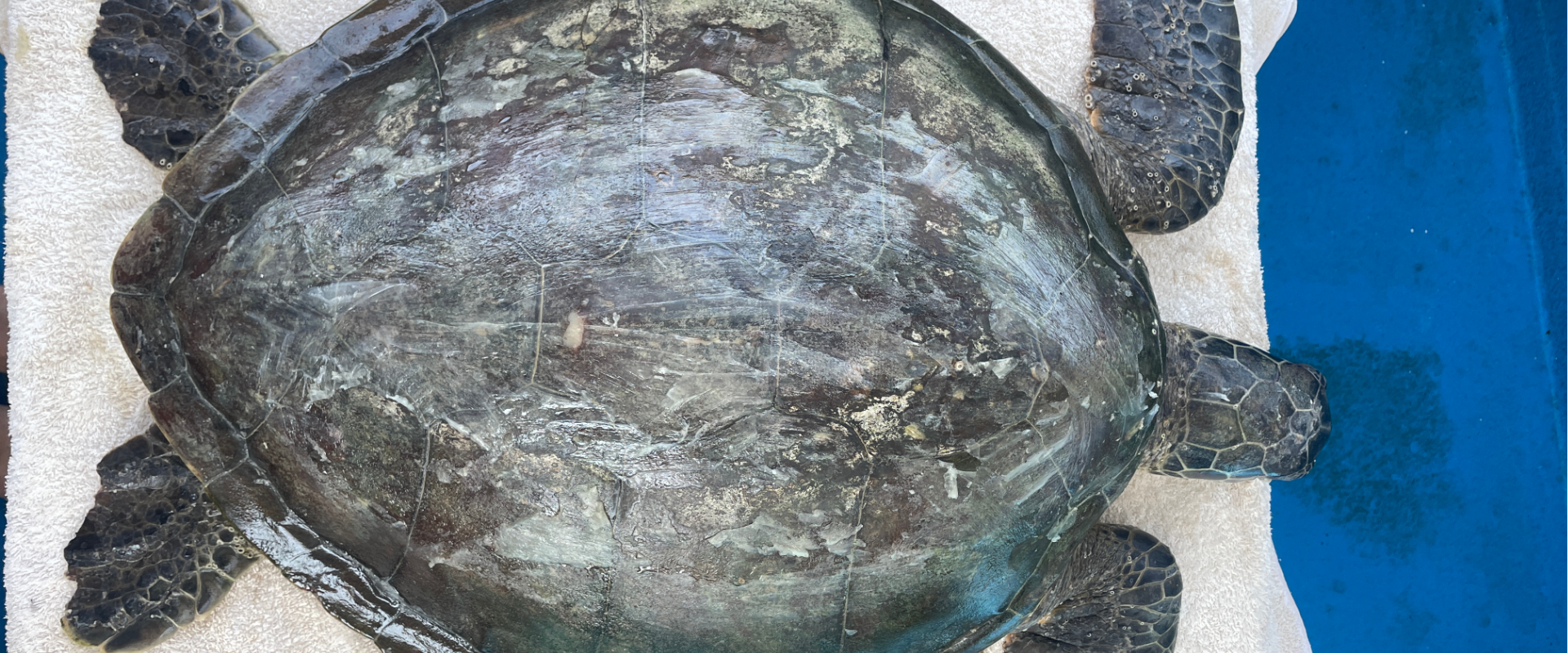
As some of you may have seen, we recently welcomed a new turtle into our Rehab Centre. Amil-Derry — named after the island where she was found, and a combination of devil ray and eagle ray — was spotted at the surface, struggling to dive and covered in barnacles. She was moved onto a Scuba Junkie boat and reported to the SEAS team.
Si Amil Island is around a 45-minute boat ride from Mabul in good conditions. We definitely did **not** have good conditions on this day! The waves were pretty big, and we were soaked by the time we arrived. Once there, Amil-Derry was transferred onto our boat and we headed back to Mabul. She was very small and weak, and barely struggled as we moved her between the boats.
Getting Amil-Derry Home
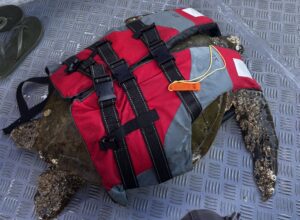 Rough boat journeys can be hard on turtles, as they are not designed to withstand impacts while on land. Thankfully, we have amazing captains at Scuba Junkie, so despite the size of the waves, it was a relatively smooth and bump-free trip back. A massive thank you to Captain Salleh for getting us there and back safely and quickly.
When we arrived back in Mabul, we assessed Amil-Derry. She was so heavily covered in barnacles that they were rubbing against each other when she stretched her neck to breathe. We gave her an IV drip to help keep her hydrated and placed her in freshwater. Sea turtles can survive in freshwater for a period of time, and we use this treatment both to help with hydration and because barnacles cannot survive in freshwater. As they die, they become much easier to remove.
Giving Her Time to Recover
In a case like this, the first thing we want to do is let the turtle settle before doing too much. They are already weak — otherwise they wouldn’t be with us — and they have been through a traumatic experience, having been taken from the ocean and placed on a boat. As Amil-Derry was not in any immediate danger, we focused on letting her rest while monitoring her closely to ensure she was able to breathe and that her carapace was not drying out.Left
The next day, we gave Amil another drip and started removing the barnacles. They peeled off surprisingly easily, leaving a few holes where they had pierced her skin. We also attempted to feed her once she was placed back into saltwater, but she showed no interest.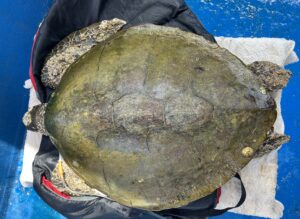
Amil-Derry was extremely buoyant, meaning we had to keep the water level low enough for her to rest. At the same time, we coated her carapace in Vaseline to prevent it from drying out. The following day, when we inspected her underside, we could see just how bloated she was, indicating that there was likely an underlying digestive or lung issue.
Throughout Amil-Derry’s time with us, we were incredibly fortunate to have the support of **Dr Nabila**, our amazing veterinary partner from the Sabah Wildlife Department. Dr Nabila was with us through every step of Amil-Derry’s care, providing guidance and advice, mostly virtually through WhatsApp. Having access to her veterinary expertise was invaluable as we tried to understand what was happening and decide on the best course of treatment.
Searching for Answers
Over the next few days, we continued monitoring Amil-Derry, trying to encourage her to eat and watching for her to pass faeces. What many people don’t realise is that turtles get much of the water they need to stay hydrated through their food. When they stop eating, they can become dehydrated very quickly. For this reason, Amil was given IV fluids every day to help keep her hydrated.
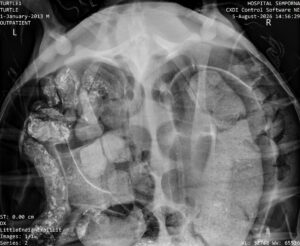 As we weren’t making any progress, we took Amil-Derry to Semporna for an X-ray. We were concerned about putting her through the boat journey given how weak she was, but we knew we needed to find out what was happening inside her.
The X-ray showed blockages in her intestines, as well as trapped air. We continued treatment and monitoring in the hope that she might eventually eat or be able to pass the blockages. Sadly, we eventually lost Amil-Derry.
What We Found
Dr Nabila also performed Amil-Derry’s necropsy, allowing us to understand what had ultimately caused her death. Inside her intestines, we found **2kg of impacted faeces**, some of which was incredibly hard. One particularly hard piece had perforated her intestine. When the impacted material was examined, we also found **20g of plastic and approximately 5 metres of nylon string**.
It is difficult to comprehend how such a small amount of plastic can cause so much damage and suffering.
Why Her Story Matters
Unfortunately, there was nothing we could have done to save Amil-Derry. But we were able to make her final days as comfortable as possible, and that matters too.
Despite the challenges we face, we will always strive to do everything within our power to save the turtles brought to us. It is not easy. Turtles are surprisingly difficult animals to treat — they are an awkward shape, live in water and, when they are healthy and strong, are incredibly powerful animals.
What makes Amil-Derry’s case particularly difficult is that her suffering was caused by human impact. Small pieces of rubbish that may seem insignificant to us can cause enormous amounts of suffering to wildlife.
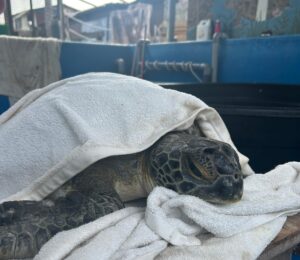
We hope Amil-Derry’s story serves as a reminder of the damage even small amounts of plastic can cause, and of the importance of disposing of our waste properly.
For Amil-Derry, it was too late. But perhaps her story can help prevent another turtle from suffering the same fate.
A huge thank you to **Dr Nabila and the Sabah Wildlife Department** for their continued support of our Rehab Centre and for helping us care for the turtles that come through our doors.
Leave a Reply
Your email address will not be published. Required fields are marked *